

Stay Tuned for 2027!
The 2026 Paul Edwin Potter Internship Program has concluded. We're currently planning our 2027 program and will post application details and project information soon.
Typical Timeline
Based on previous years, applications typically open in late winter/early spring with the program running during summer months. Check back in late 2026 for specific dates.
2026 Program
May 18, 2026 - July 29, 2026
The Paul Edwin Potter Internship Program is designed to provide academic and professional development by equipping interns with the knowledge and resources required to excel in geoscience-related research.
Eligible Applicants
Education
- Incoming and current undergraduate and master's level students enrolled at a higher education institution.
- High school students are eligible to apply, and accepted on a skills basis.
- PhD students are not eligible to apply.
Field of Study
Students interested in geoscience and related fields such as environmental science, physics, engineering, public health, or geography.
Questions? Contact us:
kgspotterinternship@uky.eduWhat to Expect
2026 Experience
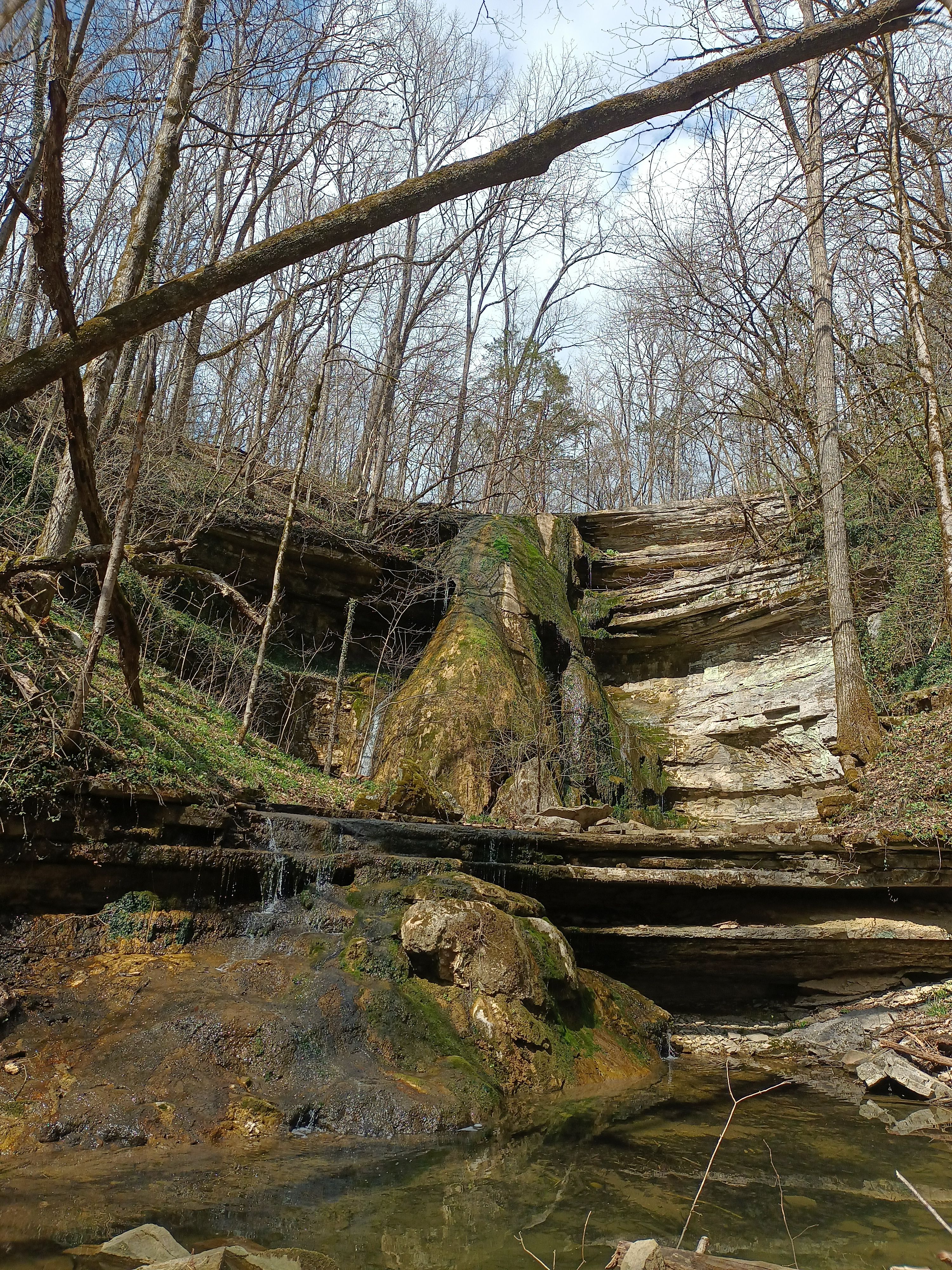
This year, we plan to hire six interns to join a research team focused on projects at Floracliff Nature Preserve. Active collaborative research between several universities is ongoing at Floracliff as part of an NSF EPSCoR initiative, and this year’s Potter interns will have the opportunity to plug into and expand on much of that work. Projects may include, but are not limited to, water budget and flood modeling of the watershed, stream monitoring, floodplain trenching, geochemical and microscopic analyses of stream deposits, drone surveying of a precipitation-induced landslide, and investigating links between biologic activity, soil disturbance, and hydrology. To ensure a valuable learning experience, each intern will work with mentors who will guide them through the 10-week program, which includes a final presentation and poster session. The results of each project will contribute to a better understanding of linked atmospheric and geologic processes in central Kentucky.
How is this different from a summer job?
Most summer jobs won't let you design your experience. This is an all-encompassing research and professional development experience. We will assign you a project topic, and you'll work with mentors to develop a research question and work plan for the summer, making tweaks along the way. Outside of your research tasks, we also provide public speaking training, mock interviews, and several field trips and seminars with UK faculty and staff.
Will I work independently?
Yes and no. We design the program to closely mimic a real-world research team, so each intern will be given their own project, but these will often overlap with other projects, and all interns will collaborate to learn techniques and complete field work.
What skills will I learn?
It depends on your project! However, most of our interns will work in standard GIS software packages and learn the basics of planning field work and note taking. Past that, some of our projects have allowed interns to build skills in:
| Software/Analytical | Field |
|---|---|
| ArcGIS Pro | Dye tracing |
| RStudio | Electrical resistivity tomography |
| QGIS | Water and soil sampling |
| Soil geochemistry | Drone lidar acquisition |
| TUFLOW | Soil infiltration testing |
| Lidar processing and interpretation | Field notes and measurements |
| Standard lab safety | Radon testing |
Intern Showcase
At the end of the internship, interns will present their work in a combined lightning talk and poster session. Short lightning talks provide interns the opportunity to concisely convey research products related to current and emerging KGS work. The poster session allows networking with future colleagues and requires the ability to communicate complex scientific concepts in a visually appealing and compelling way.
Frequently Asked Questions
Is this a paid experience?
Yes! This is a paid internship. Interns will be paid $15.75/hour (40 hrs/week) as participants in the program.
Do I have to be a student at the University of Kentucky to apply?
No. Any interested incoming or enrolled undergraduate or master's level student at a higher education institution may apply.
Do I need to be a Geoscience major?
No, we welcome students with a wide range of related educational backgrounds. Our project topics vary from year to year and require skill sets from Environmental Sciences, Physics, Engineering, Public Health, Geography, Statistics, Communications, etc.
Do you have any tips about formatting our resume or cover letter?
We would like you to submit a one- or two-page resume and a one- or two-page letter of interest/cover letter.
We will use this information to get to know you and match you to a potential position.
Specific instructions are provided on the application form.
Don't stress too much about being the best or perfect.
We will have training exercises later in the program to help hone these skills.
If you would like your resume and cover letter reviewed before submission please submit a finalized draft version as a
Word document to kgspotterinternship@uky.edu
by February 4, 2026. Please include in your email, your name, and specific questions or
concerns you would like addressed.
Is housing provided?
Interns are responsible for paying for their local housing, transportation, parking, and food. The University of Kentucky provides the following campus options:
- Housing - Offers summer housing for students in a dormitory setting.
- Transportation - Provides information on public transit at the University of Kentucky.
- Parking - Details on parking permits at the University of Kentucky.
- Dining - Information on dining options at the University of Kentucky.
What is the time commitment?
The 2026 internship will run from May 18, 2026 to July 29, 2026. We expect interns to work 40 hours a week for the entire 10-week period and attend program seminars and field experiences.
Questions? Contact us:
kgspotterinternship@uky.edu